PART 1
That night I arrived at my parents’ house in Ecatepec with a cardboard box in my arms and the biggest knot of my life stuck in my throat. Twelve years in a financial company in Santa Fe had ended with a cold phrase: “personnel restructuring.” There was no hug, there was no “are you okay, Mariana?”, there was no hot coffee waiting for me.
There was only my family gathered in the room as if there was an urgent meeting.
My mother, Rosa, was sitting next to my aunt Lupita. My father, Arturo, did not say anything. Daniela was on the couch, with freshly painted nails, cell phone in her hand and a face of indignation that did not correspond to her.
“They kicked me out, Mom,” I said slowly. “It wasn’t my fault.”
My mom sighed, but not out of sadness. It was a sigh of unfinished business.
“Well, we have to talk about the money,” he replied. “The monthly payment for the house is due on Monday. Your dad needs his medicines. And Daniela has the car payment.”
I stood in the doorway. I still had my office badge hanging in my bag. It still smelled like a corporate elevator, reheated coffee, and embarrassment.
“Did you already know?” I asked.
Daniela let out a dry chuckle.
“A friend works in human resources. She sent me a message in the morning. That’s why I came. We had to see what you were going to do.”
It hurt me more than losing my job. While I signed papers with trembling hands, they were already calculating how much money they would stop receiving from me.
For fifteen years I had been the responsible daughter. The one who paid the electricity bill, the one who filled the pantry, the one who covered emergencies, late tuition, insurance, debts and whims. They never called it help. They called it “the least you can do for your family.”
“Mariana,” my mom said, adjusting her blouse as if she were going to hand down sentence, “your sister needs more stability. She can’t live like this, with stress.”
“Daniela?” I asked. “The one who hasn’t worked for two years?”
Daniela got up suddenly.
“Don’t start with your humiliations. You always bragging that you earn more. Well, not anymore, right?”
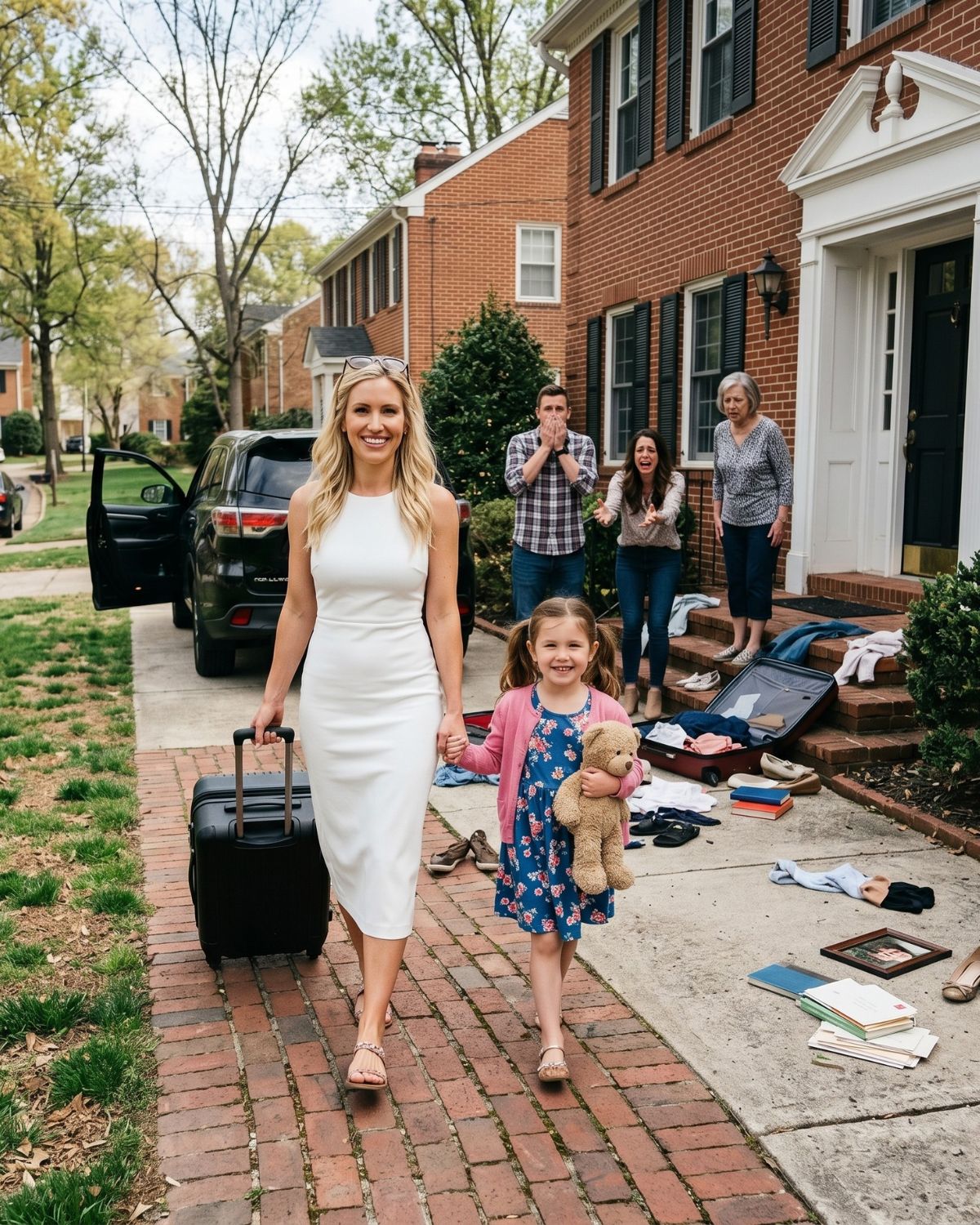
My dad got up without looking at me. He went into the hallway and came back with an empty box.
“What are you doing?” I asked.
“Pack your things,” he muttered.
I felt the floor move.
“Are they running me out?”
My mom didn’t blink.
“Your sister needs your room. You’re single, you don’t have children. You can rent something small. You always get ahead.”
You always get ahead.
That phrase had condemned me for years. Because I could, they abused. Because I endured, they demanded more.
I walked into my room and saw the empty wall. My graduation photo was gone. It had been taken down before I arrived. Before he asked me if I had a place to sleep.
My dad put my blouses in a box. Daniela crossed her arms at the door.
“And don’t go playing the victim,” he said. “The family supports each other.”
I didn’t answer. I didn’t say anything about the consulting company that was already in my name in Monterrey. I didn’t say anything about the beach house in Progreso that I had secretly bought to start over. I didn’t say that my dismissal was not my undoing, but my departure.
I took the box, walked out of that house, and heard my mom say behind me:
“When the tantrum passes, he’s going to come back.”
But they didn’t know what they had just broken.
And much less could they imagine what was going to happen next…
PART 2
I slept that night in my car, parked outside an Oxxo, with the box of my things in the back seat and my cell phone turned off so as not to read insults.
At six in the morning I drove to the terminal and bought a ticket to Monterrey. In the bag I carried my liquidation, two changes of clothes and a small key that almost no one knew existed: the key to my new office.
For two years, my partner, Santiago Villarreal, and I had quietly built a financial advisory firm for small businesses. At first it was video calls after my day, weekends without a break, and clients who came by recommendation. But the project had grown. The company already had a contract with a chain of restaurants in the north and four employees waiting for me.
When Santiago picked me up at the station, he didn’t ask me why my eyes were swollen. He just hugged me.
“Welcome to your life, Mariana.”
The office was in an old remodeled house near the Old Town. On the door, in black letters, it said: Morales & Villarreal Consultores.
Morales. My last name. The same one that in my house was only used to collect favors from me.
The first days were strange. No one asked me for money for gas. No one complained to me for buying coffee. No one called me selfish for resting.
But on the sixteenth, Daniela marked me.
I replied because, foolishly, I thought maybe he was going to apologize.
“It’s good that you grab,” he said without greeting. “The car insurance expires tomorrow. It’s eight thousand five hundred. My mom also says that the boiler broke down. Deposit it.”
I stared out the office window. Outside it was raining with that northern force that cleans the sidewalks.
“Daniela, do you know where I am?”
“Who knows. At a friend’s house? I don’t care. Are you going to send or not?”
“I’m in Monterrey. I left more than two weeks ago.”
There was silence. Not of concern. Of annoyance.
“Ah, look how dramatic. Well, from there it can be transferred too.”
That was the exact moment when something inside me closed down.
I hung up.
I opened my online banking. There were the automatic payments: monthly payments for the house, my father’s medicines, Daniela’s car loan. Almost fifty thousand pesos a month came out of my account to support a family that had taken me out of my own room.
I wrote an email.
Subject: Notice of suspension of economic support.
I was clear. Starting on the first of the following month, I would stop paying for my house, car, and any personal expenses. I sent them information to renegotiate debt, seek public insurance, and organize their finances. I didn’t insult. I didn’t cry. I didn’t ask for permission.
I hit send.
Seven hours later, the cell phone exploded.
My mom: “Mariana, this is not done to a mother.”
Daniela: “They’re going to take my car because of you.”
My dad: “Daughter, don’t be radical. Let’s talk.”
No one asked if I ate. No one asked where I lived. They only noticed my absence when the money stopped falling.
Then my aunt Lupita called.
“My girl,” she said in a low voice. “Your mom is saying in church that you became arrogant since they kicked you out. That you abandoned your family because of a tantrum.”
I laughed, but it came out like tears.
“After everything I paid?”
“That’s not the worst thing,” he murmured. “Your mom is also saying that the house is theirs because you ‘only helped a little.’ I think she doesn’t know how much you should cover.”
Then I understood that the coup was just beginning. They didn’t just want my money. They wanted to control history.
Two months later we formally inaugurated the office. Clients, businessmen, new friends came, even my grandmother Carmen, who traveled from Puebla in a wheelchair because she said she would not miss “the day when my granddaughter stopped apologizing for shining.”
I was giving a speech when the door opened.
My mom came in. Behind, Daniela. And at the end, my dad, with a gray face.
Daniela walked straight towards me, in front of everyone, and spat:
“So you did have money for wine and fancy office, but you let them take my car?”
And what I answered made the whole room freeze…
PART 3
“Yes,” I said in front of everyone. “I had money. What I no longer had was an obligation to support someone who took me out of my room the night I lost my job.”
Daniela opened her mouth, but she couldn’t find words. My mom put her hand to her chest, as if I had hit her.
“Mariana, don’t make scenes,” she whispered. “We’re your family.”
“How curious,” I replied. “That word is only used when they need something.”
The room was in complete silence. Customers, employees, guests. Everyone watched. For the first time, my family was not in control of the stage.
My mom tried to cry.
“We sacrifice ourselves for you.”
That’s when I felt my chest burn.
“No, mom. I paid the mortgage for five years. I covered Dad’s medicines. I signed Daniela’s car as collateral so that they would stop talking badly about me. In fifteen years I gave them more than four million pesos. And the night I lost my job, the first thing they asked was who was going to pay their bills.”
My dad looked down.
Daniela, red with courage, shouted:
“Well, if you had so much, you should have helped us more! That’s what family is for!”
My grandmother Carmen hit the floor with her cane.
“No, Daniela! The family is not a cash register.”
My mom turned to her.
“Mom, don’t mess around.”
“I’m getting in because I’m tired,” my grandmother said. “Rosa, you made Mariana a chair: useful while she was carrying weight, invisible when no one needed it. And when she stopped holding them, you wanted to throw her away.”
My mom dropped her mask. She didn’t look sad anymore. She looked uncovered.
“I was only protecting the daughter who stayed with me,” he said, looking at Daniela.
“And you erased the one who kept you,” I replied.
My dad took a step toward me. My eyes were wet.
“Forgive me, daughter,” he said. “I have no excuse. I packed your things. I should have defended you.”
I looked at him. That man had been a coward, yes. But for the first time he wasn’t justifying himself.
“Thank you for saying it,” I replied. “But today I didn’t come to heal everything. Today I came to celebrate something I built alone.”
Santiago approached the door. He didn’t say anything. He just opened it.
My mom understood.
“Are you running us away?”
“No,” I said. “I’m setting a limit.”
Daniela let out a bitter laugh.
“You’re going to be left alone.”
I looked around. My grandmother. My aunt Lupita. My employees. My partners. People who looked at me as someone, not as a bank account.
“No,” I said. “I finally stopped being around people who used me.”
They left quietly. My dad was the last. Before he walked through the door, he looked at the company sign and then at me.
“I’m proud,” he murmured.
I didn’t answer. It still hurt too much.
Months later, the house in Ecatepec was at risk of foreclosure. My mom had to rent the room that used to be mine to a student. Daniela got a job in a paint store and now takes a van because the car was recovered by the financier. My dad calls me every other Sunday. We talk about his plants, the climate, small things. Someday we’ll talk about that box. Not yet.
I moved to my beach house in Progreso. From there I travel to Monterrey every month for the company. In my living room there is a framed photo: me on the day of my graduation, smiling in a robe that no one could really take off from me.
My mom called me one afternoon.
“I was wrong,” he said. “I thought that since you always could, you always should.”
Breathed hondo.
“If you want to come back to my life, Mom, you have to meet me without asking me for anything.”
He didn’t answer. Maybe because for the first time he didn’t know what to say.
I learned that setting boundaries doesn’t destroy a family. It only reveals who loved you and who just needed you.
My name is Mariana Morales. I am thirty-seven years old. I lost a job, a house and a false version of my family.
But that night, when they threw me out with a box in my arms, I didn’t lose my life.
I got it back.