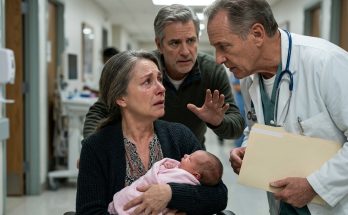
I lived to eighty-eight.
Long enough to see Maya turn twelve.
Long enough to watch Noah's ICD replaced twice.
Long enough to see him become a biomedical engineer specializing in device reliability.
Of course he did.
He did not become a cardiologist. He did not turn the MYBPC3 variant into a personal crusade. He became a man fascinated by systems that needed to work correctly when people depended on them.
I understood that.
Maya grew up knowing her father had a heart condition.
Not as family tragedy.
As health information.
She knew Oliver's name and had seen his photograph. She knew Eleanor had been complicated. She knew Julian mostly as Grandpa Jules, an old man who worried too much, cheated shamelessly at cards, and pretended not to let Maya win.
Family history had finally been resized.
Julian died before I did.
He was eighty-five.
His heart failure progressed gradually over several years. There was no sudden collapse that turned his genetics into poetic punishment. No final irony.
His doctors treated him.
Noah remained involved.
When hospice began, Julian asked to see me.
I went because I chose to.
By then my memory was unreliable enough that I needed help getting there. Still, that afternoon was relatively clear.
Julian looked thin in the bed.
Older than I felt, though that was probably memory flattering me.
"I'm glad you came," he said.
I sat beside him.
For several minutes neither of us spoke.
Then Julian asked, "Was Noah worth all of it?"
I felt anger rise so quickly that he saw it before I answered.
"That's a terrible question."
He closed his eyes.
"Wrong words."
"Yes."
He tried again.
"Are you glad he happened?"
"Of course."
The distinction mattered.
Noah did not justify the pain surrounding his birth.
Children do not retroactively make abuse necessary.
A beloved outcome does not transform the harm around it into a useful price.
"Noah wasn't the reason the pain became worth it," I said. "He's a person. The pain was still pain."
Julian nodded slowly.
He had spent much of his life trying to force events into narratives.
Oliver's death meant there should be no more children.
My pregnancy meant betrayal.
Noah's birth could become redemption.
None of that was necessary.
Oliver mattered.
Noah mattered.
Julian's actions mattered.
His later repair mattered.
Separate categories.
Even at the end.
Julian looked toward the window.
Then he said, "I'm sorry I took away your choice."
The wording stopped me.
Not reputation.
Not money.
Not custody leverage.
Choice.
Finally the deepest thing had a name.
"You did."
"I know."
He swallowed.
"I'm glad Noah learned better."
"So am I."
That was our last serious conversation.
I did not tell him I forgave him.
I did not need to.
I held his hand for several minutes.
Then I left.
Julian died three days later.
Noah handled the funeral.
Eleanor had been gone for years. Old Vance friends attended. Business associates filled several rows. Mara did not come, but she sent a note.
I attended with a caregiver because my memory could no longer be trusted to carry me through an event like that alone.
At times I understood exactly where I was.
At other moments the room looked like a business reception from decades earlier.
Then I leaned toward Noah and whispered, "Where's your father?"
He squeezed my hand.
"This is his funeral, Mom."
The grief arrived as if I had just been told.
Then it faded.
Memory illness can make loss happen more than once.
Noah eventually learned not to correct every confusion. Professionals helped him decide when orientation mattered and when comfort mattered more.
Julian's estate contained no final attempt at control.
That pleased me when I was clear enough to understand it.
His assets passed to Noah, charities, and other beneficiaries according to an established plan. There was no requirement that Noah preserve a Vance company, protect a family reputation, or follow medical instructions from a dead man.
No hidden condition.
No demand for forgiveness.
There was one personal note for Noah.
During a lucid afternoon, Noah read part of it to me.
Julian wrote that he had spent too much of his life believing love gave him the right to decide what information other people could handle.
Then he told Noah not to inherit that belief.
I smiled.
"Good."
Noah folded the note.
"He learned."
"Late."
"Still."
Yes.
Still.
My final years became quieter.
Independent living had become assisted living, then memory care.
Maya visited.
Sometimes she read beside me.
Sometimes I called her by the wrong name.
Once I called her Eleanor.
Another time Oliver.
Noah did not turn every mistake into a lesson about family history.
He redirected me.
One afternoon, during an unusually clear stretch, Maya sat nearby doing homework while Noah and I talked.
I asked, "Does she have the gene?"
Noah smiled.
"No."
"Good."
Then I heard myself.
"Not good because people who have it are bad."
"I know what you meant."
I studied him.
"How's your heart?"
"Okay."
His device had not fired in years. He remained on medication and under surveillance. His heart was not cured.
It was managed.
Life, not perfection.
"You knew before you had children," I said.
"Yes."
"Lena knew?"
"Yes."
"You told her everything important?"
"Yes."
That mattered more to me than Maya's negative result.
Noah had known before making reproductive choices.
Lena had known before making them with him.
They had received counseling.
They had been allowed uncertainty.
They had chosen.
I had not received that.
Noah had.
Lena had.
Maya would.
"Then we did something right," I said.
Noah started crying.
I frowned.
"Why are you crying?"
He laughed through it.
"Because you said something nice."
"Rare."
Maya looked up from her homework.
"Grandma says nice things."
"Don't spread rumors."
She laughed.
So did Noah.
Humor survived even when memory did not.
My estate was simple by then.
A professional executor.
Noah as my primary family beneficiary.
Defined gifts for Maya.
Some charitable support for legal-aid programs that helped people navigate financial coercion during divorce.
Nothing named after me.
No dramatic foundation.
Over decades, my assets had come from work, savings, investments, the old settlement, and ordinary accumulation. Money eventually loses some of its origin story unless a family insists on attaching one forever.
I had no interest in making future generations perform my history.
The final letter I wrote to Noah was completed while I could still revise it carefully.
I told him he had been born into a hospital room full of adults carrying secrets.
I told him those secrets were never his responsibility to resolve.
I wrote that his father loved him and had also harmed me badly before he was born.
Both were true.
Eleanor had loved him and had helped pressure me while I was pregnant.
Both were true.
Oliver had been his brother.
Not his warning.
The gene was information.
Not identity.
Then I wrote the part I most wanted him to remember.
People deserve enough truth to make decisions about their own lives.
Do not hide reality because another person's answer frightens you.
Do not use money to purchase the answer you want.
Do not call control protection simply because love or fear motivated it.
And when evidence has finished doing its work, close the file and return to living.
I signed it simply:
Love,
Mom
I did not ask Noah to hate Julian.
I did not ask him to preserve my interpretation as the only version of our family.
I had spent too many years learning that truth did not require one person to own every narrative.
I died at eighty-eight after complications from pneumonia.
There were no perfect last words.
I did not need them.
Noah and Lena were there.
Maya arrived later.
The professional executor handled my estate.
There was no surprise account.
No challenge.
No revenge clause.
The legal part of my life ended quietly.
That felt right.
Years later, Maya encountered autosomal dominant inheritance in a high-school genetics class.
She came home with questions.
Noah told her the family story at the level she was old enough to understand.
Julian.
Oliver.
The MYBPC3 variant.
Noah.
Testing.
Choices.
Then Maya asked him whether I had been angry because Noah inherited the gene.
Noah laughed.
"No. Grandma Vivian was angry because people hid information."
That was the story.
Not the gene.
Not the Vance money.
Not even the divorce.
Information.
Choice.
Power.
When I announced my pregnancy, Julian and Eleanor believed they could decide how much truth I received. They believed they could determine how much financial pressure I could tolerate, what friends should hear, what uncertainty would frighten me, and what parenting arrangement I might sign if enough doors closed around me.
They had money.
Records.
Family loyalty.
Information.
They mistook those advantages for authority over my choices.
Then Noah was born.
Dr. Adrian Shaw looked at his face and recognized something he had seen before.
Another Vance child.
Oliver.
That resemblance did not solve anything.
It did not expose every document.
It did not prove paternity.
It did not determine custody.
It did not punish Julian.
It opened a door.
Behind that door were fertility tests, medical records, genetic history, emails, financial transfers, paternity testing, court hearings, specialists, therapists, and years of choices no dramatic hospital revelation could make for us.
The doctor's face was never justice.
It was the first crack in a structure built on secrecy.
The rest required process.
I preserved evidence.
Professionals tested it.
Naomi separated outrage from what the law could actually use.
David traced money instead of assuming every suspicious transfer was fraud.
The court separated property disputes from parenting questions.
Doctors separated genetic risk from destiny.
Therapy separated explanation from excuse.
Time separated apology from restored access.
Parenting eventually separated love from control.
Julian became a better father without becoming my husband again.
Eleanor became a safer grandmother without becoming innocent of what she had done.
I became financially secure without destroying anyone.
Noah inherited a dangerous variant without inheriting the family's silence around it.
Maya inherited the history without inheriting its shame.
No one received a perfect ending.
We received an honest one.
When Noah was born, I believed the most frightening thing in the hospital room was that a doctor appeared to know something impossible about my child.
By the end of my life, I understood the greater danger had been ordinary.
Adults deciding that fear gave them permission to hide the truth.
Fear can explain silence.
It does not create the right to impose it.
Grief can explain why someone avoids a painful fact.
It does not transfer ownership of that fact.
Money can create options.
It does not create authority over another person's body, marriage, child, or future.
Love can make control feel protective.
That does not make control love.
Truth should still arrive with care.
Children need information at the level they can understand.
Medical privacy matters.
Not every record belongs to every relative.
Not every fact should be announced publicly simply because secrecy once caused harm.
Purpose matters.
Timing matters.
Consent matters.
But when another person's body, finances, marriage, or future depends on information you possess, their possible reaction does not give you the right to withhold what they need to choose.
Julian learned that too late for our marriage.
He learned it in time to become a different father.
Noah learned it before he became a husband and parent.
Maya grew up in a family where the lesson had become ordinary enough that she did not know how revolutionary it once was.
That was enough for me.
I did not need Julian defeated.
I did not need Eleanor remembered only for her worst decisions.
I did not need every person who repeated a rumor to apologize.
I did not need the old fertility email preserved forever in a locked archive.
I needed the truth to reach the people whose choices depended on it.
It did.
I needed Noah to know that Oliver had been his brother, not a prophecy.
He knew.
I needed him to understand his heart without believing his gene defined him.
He did.
I needed him to know that money could help without purchasing obedience.
He learned.
I needed him to become capable of hearing fear without automatically surrendering his choices to the person who felt it most strongly.
He became that man.
And when his own child entered the world, she arrived without a room full of adults deciding which truths she would someday be permitted to know.
The family had changed.
Not perfectly.
Not all at once.
Enough.
That was the outcome I could finally stop proving.
The End
Read more original stories on Feel Every Story.
The Doctor Looked at My Newborn, Then at My Estranged Husband, and Suddenly Everyone in the Delivery Room Went Quiet
Part 16 of 16